
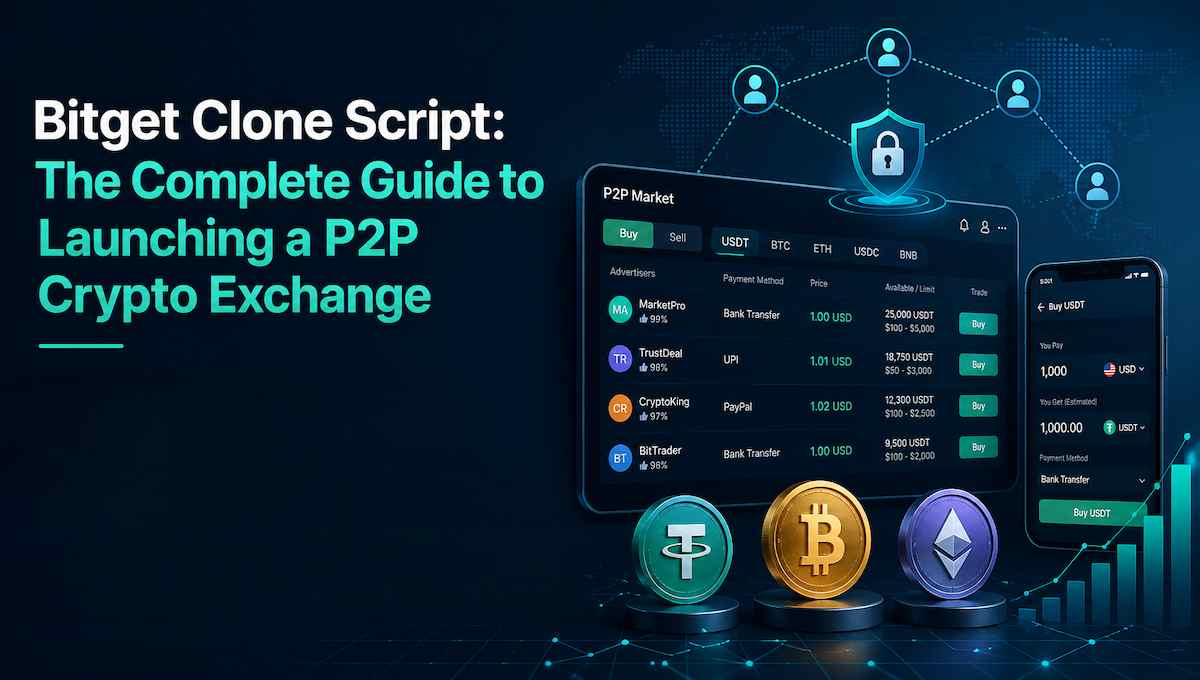
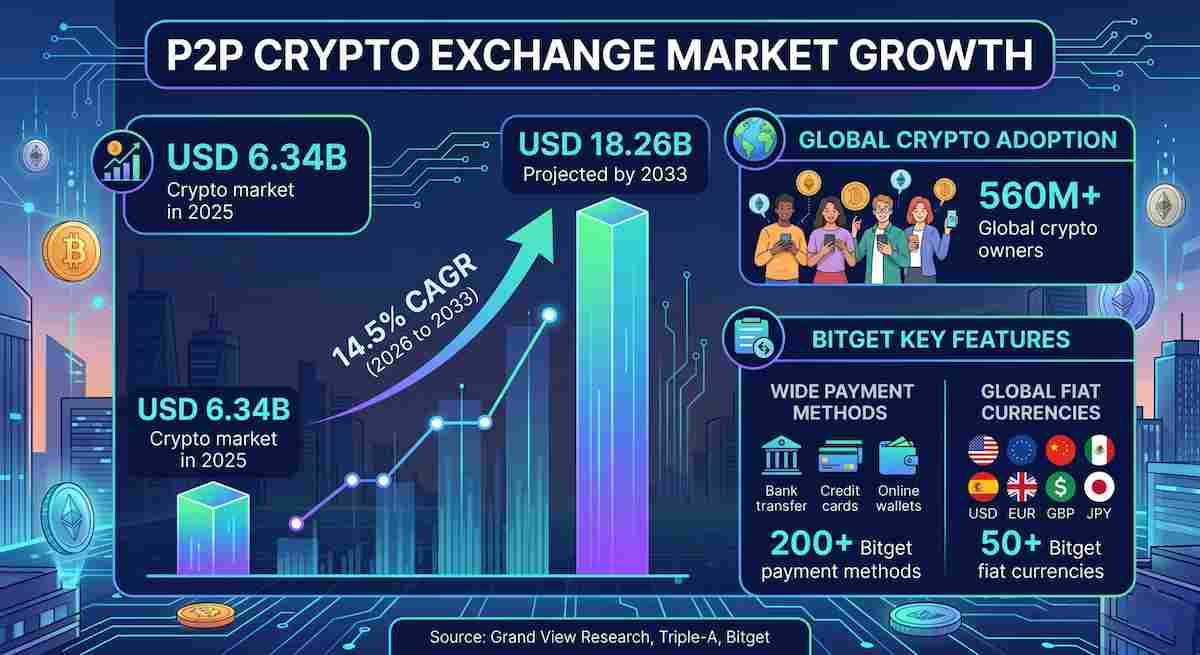
Crypto trading is no longer limited to large exchanges and complex order books. Users now want faster local payments, direct seller access, and more control over trade prices. The numbers show why this market keeps growing. Grand View Research valued the global cryptocurrency market at USD 6.34 billion in 2025 and projects it to reach USD 18.26 billion by 2033, with a CAGR of 14.5% from 2026 to 2033. At the user level, Triple-A reported more than 560 million crypto owners worldwide in 2024, which points to rising mainstream adoption.
This growth has pushed peer-to-peer trading into a stronger business position. A P2P crypto exchange connects buyers and sellers directly, then protects each trade through escrow, merchant controls, payment verification, and dispute support. Platforms like Bitget show why this model appeals to users and businesses. Traders can choose local payment methods, avoid high charges, and trade with more flexibility. For businesses, a Bitget clone script offers a faster path to enter the market. It gives them a ready-made base for P2P crypto exchange development, with escrow protection, merchant listings, wallet support, and admin controls. For any company that wants to launch a crypto exchange platform, this model offers speed, lower build time, and strong business potential.
What Is a Bitget Clone Script?
A Bitget clone script is ready-made P2P crypto exchange software built around the Bitget-style trading model. It includes a marketplace where merchants post buy or sell ads, buyers choose offers, and the platform protects funds through escrow.
Definition and Core Concept
The script recreates three main parts of a Bitget-like platform:
- Marketplace model for buyer and seller matching
- Escrow-based transactions for safer trades
- Merchant-driven pricing for local market control
How the Bitget P2P Model Works
The trade process is simple. A merchant posts an ad with price, limits, and payment method. A buyer selects the offer. The crypto moves into escrow. The buyer sends fiat payment. The seller confirms receipt. Then the platform releases crypto to the buyer.
Key Features of Bitget-Like Platforms
A strong Bitget clone script needs zero-fee trade settings, escrow protection, multi-payment support, merchant dashboards, user ratings, KYC controls, admin monitoring, and dispute management. These features help businesses enter P2P crypto exchange development with lower build time and clearer product-market fit.
Market Opportunity & Business Potential
Growth of P2P Crypto Trading Market
P2P crypto trading is gaining ground in markets where users need local payment options, faster access to USDT, and direct trade control. Chainalysis named India, Nigeria, the United States, Vietnam, and Ukraine among key crypto adoption markets in 2025, with use cases tied to savings, payments, and remittances.
Demand is strongest where banking access is uneven or cross-border payments cost too much. A Bitget clone script gives businesses a tested model: buyers and sellers trade directly, and the platform holds crypto in escrow until payment is confirmed.
Why Businesses Are Investing in P2P Exchanges
A P2P crypto exchange has lower running costs than a full order-book exchange. The users create trade offers, set prices, and bring liquidity. The business earns through merchant fees, ads, premium listings, withdrawal fees, and trade margins.
Bitget’s own P2P model shows why this format works. It offers zero P2P service fees, escrow-backed trades, and support for many payment methods.
Target Audience & Use Cases
Crypto startups can launch faster with a Bitget clone script. Fintech firms can add crypto rails to existing payment apps. Payment processors can serve users who need local currency access. OTC desks can handle large trades with merchant controls and private pricing.
Core Features of a Bitget Clone Script
User Panel Features
Users need secure signup, KYC, multi-crypto wallets, live trade matching, payment proof upload, and full transaction history. These features build trust during every trade.
Merchant Panel Features
Merchants need ad posting, price control, order tracking, trade limits, payment method settings, and a reputation score. Bitget lets merchants post ads with chosen prices, payment methods, and trade amounts.
Admin Panel Features
Admins need user management, transaction tracking, dispute tools, payment settings, fraud alerts, and analytics. Strong admin control protects revenue and user trust.
Advanced Functionalities
A strong Bitget clone script includes escrow smart contracts, fiat support, automated matching, multi-currency wallets, AI fraud checks, and 24/7 dispute workflows. Bitget uses escrow and dispute support to protect online trades.
Technical Architecture of a P2P Crypto Exchange
A Bitget clone script needs a strong technical base to support secure, fast, and user-friendly crypto trading. The frontend is the first layer users interact with, so it must make account creation, trade posting, price comparison, payment confirmation, and order tracking simple. React and Angular are strong choices for this layer, since they support fast loading pages and real-time updates.
Frontend and Backend Technologies
The backend handles the core trading logic. Node.js supports high-volume activity, Python works well for risk checks and fraud scoring, and Java suits enterprise-grade platforms that need strict control over performance and uptime. APIs connect the exchange with payment gateways, crypto wallets, price feeds, blockchain networks, and notification systems. This connection matters a lot in P2P trading, since poor API performance can delay payments, block withdrawals, and create user disputes.
Blockchain Integration
Blockchain integration controls how digital assets move inside the platform. Wallet APIs allow users to deposit, hold, and withdraw crypto. Smart contracts can manage escrow, where the seller’s crypto stays locked until the buyer completes payment. This escrow model builds trust between unknown traders and reduces the chance of payment fraud. Multi-chain compatibility gives the platform wider reach. Support for Bitcoin, Ethereum, Tron, BNB Chain, and stablecoins helps businesses serve more regions, trading habits, and payment preferences.
Security Framework
Security must sit at the center of the architecture. End-to-end encryption protects user data. Multi-signature wallets reduce fund loss risks. Cold storage keeps most crypto assets offline. KYC and AML checks help the exchange meet legal rules and stop bad actors before they damage the platform.
Step-by-Step Process to Launch a P2P Crypto Exchange Like Bitget
Launching a Bitget P2P exchange needs more than a ready script. The business must plan the market, choose the right development partner, test the platform, and build user trust from day one. Each step affects cost, launch speed, security, and long-term revenue.
Step 1: Market Research and Business Planning
Market research gives the project a clear direction. The business must identify its target audience, such as retail crypto traders, OTC merchants, remittance users, or regional fiat buyers. Each group has different needs. Retail users want simple trades and fast payments. Merchants need ad controls, pricing tools, and order limits.
Competitor analysis helps the business find gaps in existing platforms. This includes fees, supported coins, payment methods, dispute response time, KYC process, and local language support. A strong plan also defines revenue streams, such as merchant fees, featured ads, withdrawal fees, and premium accounts.
Step 2: Choose the Right Clone Script Provider
The clone script provider must offer more than basic source code. The business should check escrow features, wallet security, admin controls, dispute tools, payment support, and KYC options. Customization also matters. A fixed script can limit growth, so the provider must support changes in design, features, coins, fiat currencies, and compliance flows.
Step 3: Customization and Branding
Customization turns a Bitget-like script into a branded exchange. UI/UX design should match the target users and make trading simple. Feature enhancements can include merchant badges, regional payment filters, live chat, referral rewards, price alerts, and advanced admin reports.
Step 4: Integration
Payment gateways connect the exchange with fiat transfers, mobile wallets, bank systems, and local payment apps. Crypto wallet integration manages deposits, withdrawals, balance checks, and blockchain confirmations. These systems must work together with escrow, order status, and admin review tools.
Step 5: Testing and QA
Testing checks speed, trade accuracy, and system stability. Performance testing measures how the platform handles high user traffic and order volume. Security audits review wallet flows, escrow logic, login safety, API access, and admin permissions. QA must also test failed payments, cancelled trades, delayed confirmations, and dispute cases.
Step 6: Deployment and Launch
Deployment starts with server setup, database configuration, SSL certificates, monitoring tools, backup systems, and access controls. The go-live strategy should start with a controlled launch. A smaller user group helps the team catch real issues before wider promotion.
Step 7: Marketing and User Acquisition
Marketing brings liquidity to the exchange. SEO and content marketing can target keywords such as Bitget clone script, P2P crypto exchange development, buy crypto exchange script, and white label P2P crypto exchange. Referral programs help bring traders and merchants faster. Early rewards, reduced fees, and merchant incentives can build trade volume during the first few months.
Key Benefits of Launching a Bitget P2P Clone Platform
Faster Market Entry for Crypto Businesses
A Bitget clone script gives crypto businesses a faster way to enter the peer-to-peer trading market. Building a crypto exchange from scratch takes time, money, testing, and a skilled development team. A ready-made Bitget-like P2P crypto exchange script reduces that burden with built-in trading flows, escrow features, merchant tools, wallet support, and admin controls. This helps businesses launch faster and start earning sooner. The return on investment can improve since the platform starts with tested core features rather than a blank development plan.
Global Reach Through Local Payment Support
The platform can reach users across many regions. P2P trading works well in markets where users prefer local bank transfers, mobile wallets, or other familiar payment methods. Bitget states that its P2P service supports more than 100 payment methods, including bank transfers, PayPal, WebMoney, and e-wallets. This type of payment freedom helps a crypto exchange attract buyers and sellers from different countries. A scalable infrastructure then helps the business handle more orders, fiat pairs, merchants, wallet activity, and support requests as trading volume grows.
Direct Trading and Better User Control
Users benefit from direct trading. They can buy and sell crypto without depending on a central order book. They choose the seller, payment method, trade amount, and price range. Escrow adds trust by holding crypto during the trade and releasing it after payment checks are complete. This makes P2P crypto trading safer for both sides. Better price control is another strong user benefit. Many traders compare offers from different merchants and pick the deal that suits them best.
Lower Fees and Stronger Market Position
A Bitget P2P clone platform can stand out through lower fees, local payment support, and a user-controlled trading model. Traditional crypto exchanges often charge trading fees, withdrawal fees, and spread-based costs. A P2P exchange can reduce these costs and still earn through other channels. This gives businesses a strong market position, mainly in regions with rising crypto adoption and strong demand for fiat-to-crypto access.
Monetization Strategies for P2P Crypto Exchanges
Transaction Fees and Merchant Plans
A P2P crypto exchange can earn revenue without making basic trading costly. Optional transaction fees can apply to selected trade types, high-volume users, or advanced merchant accounts. Merchant subscription plans give verified sellers extra benefits, such as higher trade limits, better visibility, and faster support. This model helps the platform earn from active merchants without discouraging new users.
Featured Listings and Payment-Based Fees
Featured listings can bring steady income since merchants often pay to appear higher in search results and attract more buyers. Deposit and withdrawal fees can create another revenue stream, mainly for crypto transfers, fiat gateway use, or premium processing options. These charges work best when they stay clear, fair, and easy to understand.
Token Listings and Advertising Partnerships
A Bitget clone script can support more income channels as the platform grows. Token listing fees allow new crypto projects to reach active traders. Advertising partnerships can bring revenue from wallet providers, payment firms, blockchain projects, and fintech brands. These income streams work well once the platform has strong traffic and active users.
Premium Tools for Serious Traders
Premium trading tools can serve serious merchants with analytics, trade reports, pricing alerts, and bulk order controls. These paid tools increase platform value without hurting casual users. They also help professional traders manage more orders with less manual effort.
Building Long-Term Commercial Value
For businesses, the main goal is not only to launch a P2P crypto exchange. The goal is to build a trusted trading platform that attracts users, supports merchants, protects transactions, and earns from many sources. A strong Bitget P2P clone platform can create long-term commercial value through liquidity, trust, local payment access, and steady user activity.
Conclusion
A Bitget clone script gives businesses a practical path to launch a peer-to-peer crypto exchange with strong trading features, escrow protection, merchant controls, and flexible payment support. It helps reduce development time, lower starting costs, and reach users across local and global markets. For traders, it creates a simple way to buy and sell crypto with better price control and direct payment choices. For platform owners, it opens income channels through merchant plans, featured listings, transaction fees, token listings, ads, and premium tools. Businesses that want to enter the crypto exchange market with a tested P2P model can use this platform to build trust, grow liquidity, and create long-term revenue.