
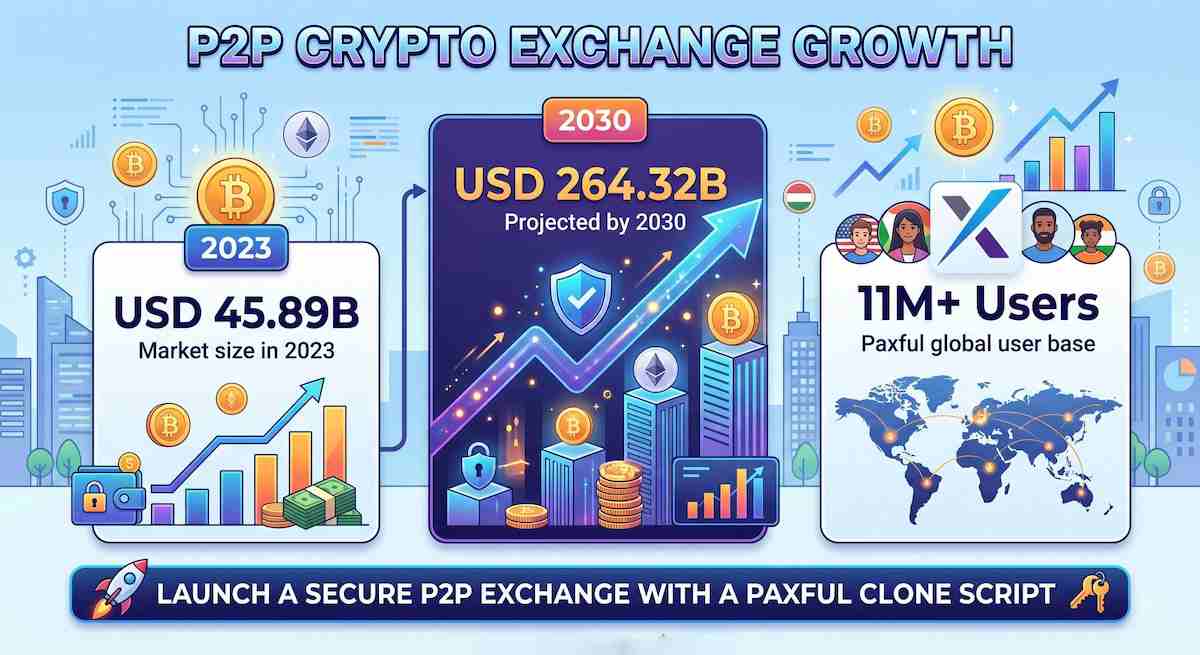
The crypto exchange business is growing fast. Grand View Research valued the global cryptocurrency exchange platform market at USD 45.89 billion in 2023. The same report projects it to reach USD 264.32 billion by 2030, with a 28.4% CAGR. These numbers show a clear shift in demand. Startups, fintech firms, and enterprises now see crypto trading platforms as a serious growth channel. P2P crypto exchanges have gained strong traction in this market. They let buyers and sellers trade directly, and the platform manages escrow, payments, user checks, and disputes.
Paxful helped prove that this model can work at scale. It made crypto trading more flexible through direct transactions and a wide range of payment methods. This opened a clear opportunity for businesses that want to serve users across regions and local payment systems. Security adds more weight to this opportunity. Reuters reported that crypto hacks caused USD 2.2 billion in losses in 2024. This figure shows why secure P2P crypto exchange development matters. A Paxful clone script gives businesses a faster route to market with key features already built, including a trading engine, wallet system, escrow, admin dashboard, and user controls.
What is a Paxful Clone Script?
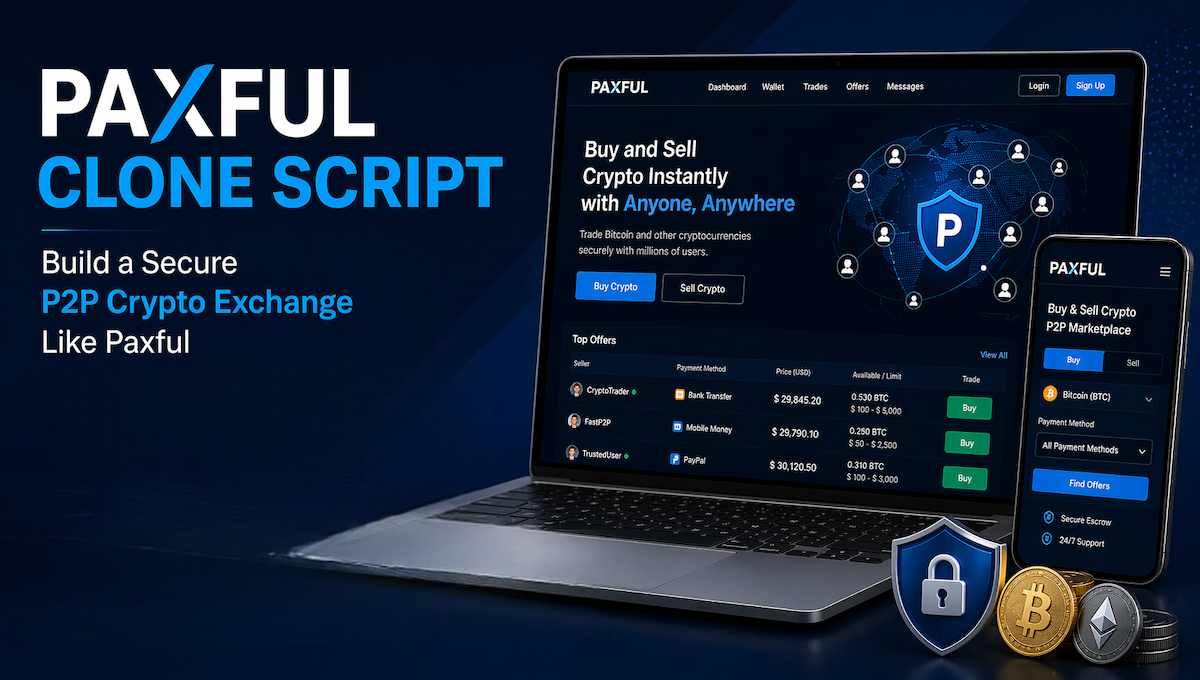
A Paxful clone script is ready-made P2P crypto exchange software built with features similar to Paxful. It gives businesses the core tools needed to launch a crypto trading marketplace without writing every module from scratch.
The main idea is simple. Users create accounts, complete verification, post buy or sell offers, choose payment methods, and trade through escrow. The escrow system holds crypto during the trade. After payment confirmation, the platform releases funds to the buyer. This structure builds trust between strangers.
A Paxful clone script differs from custom development in three clear ways: speed, cost, and risk. Custom crypto exchange development often needs a larger budget, a longer build cycle, and a bigger technical team. A ready-made script starts with tested modules. The business then adds branding, payment options, supported coins, language settings, fee rules, and compliance workflows.
Core components include:
- Trading engine for buy and sell orders
- Crypto wallet system for deposits and withdrawals
- Escrow mechanism for safer P2P trades
- Admin dashboard for users, fees, disputes, and reports
- KYC and AML tools for identity checks
- Chat system for trade communication
- Payment method management for local and global markets
For decision-makers, the commercial value is clear. A Paxful clone script cuts launch time, reduces build cost, and gives the business a proven operating model. It works best for crypto startups, fintech brands, payment firms, and enterprises that want to enter P2P crypto trading with a controlled budget and a faster market launch.
How a P2P Crypto Exchange Like Paxful Works
Step-by-Step Workflow
A Paxful clone script supports direct crypto trades between buyers and sellers. The platform does not buy or sell crypto itself. It gives users the tools to trade safely.
The process starts with user registration and KYC verification. This step checks identity, limits fake accounts, and helps the business meet AML rules. FATF states that virtual asset service providers must follow risk checks, registration, monitoring, and AML controls.
After approval, users post buy or sell offers. Each offer can include the coin, price, payment method, trade limit, and terms. Paxful-style marketplaces often support hundreds of payment options, which can include bank transfers, mobile money, wallets, and gift cards.
The exchange then matches buyers and sellers. Once a buyer starts a trade, the escrow system locks the seller’s crypto. This step matters most. The seller cannot take back the crypto mid-trade. The buyer cannot claim coins without payment proof. The platform releases crypto only after payment confirmation.
A strong workflow includes:
- User signup and KYC check
- Buy and sell offer creation
- Buyer and seller matching
- Crypto locked in escrow
- Payment proof and confirmation
- Crypto release to buyer
- Ratings and trade feedback
The rating system builds trust over time. A trader with many completed deals and strong reviews attracts more business. This creates a self-checking market where users reward honest activity.
Role of the Platform
The platform acts as a facilitator, not a central authority. It gives users wallets, trade rules, escrow, chat, and dispute support. This model reduces friction and supports direct trading across regions with different payment habits.
Key Features of a Paxful Clone Script
User Features
A strong Paxful clone script needs multi-currency wallets, buy and sell ads, real-time chat, trade alerts, and many payment choices. These features help users trade in their local market without complex steps.
Admin Features
The admin panel gives the business control. Teams can manage users, review transactions, settle disputes, track revenue, and detect suspicious activity. This dashboard also helps owners measure fees, trade volume, user growth, and market demand.
Security Features
Security decides user trust. A serious P2P crypto exchange script should include 2FA, escrow protection, anti-phishing checks, encryption, KYC, AML screening, and wallet controls. These features reduce fraud risk and support safer growth.
Advanced Features for Competitive Edge
AI fraud detection, multi-language access, mobile apps, API links, escrow logic, and a clear admin dashboard help the platform compete in crowded markets. For businesses, these features turn a basic trading site into a revenue-ready P2P crypto exchange platform.
Business Benefits of Using a Paxful Clone Script
Faster Time-to-Market
A Paxful clone script helps a business enter the P2P crypto market without a long build cycle. A custom exchange can take many months to plan, code, test, audit, and launch. A ready-made Paxful-style platform shortens that path. The core modules are already present: user accounts, trade offers, escrow, wallets, chat, admin controls, and dispute handling.
This speed matters. Crypto demand keeps rising in retail markets. Chainalysis ranked India first in its 2025 Global Crypto Adoption Index, followed by the United States, Pakistan, Vietnam, and Brazil. APAC crypto activity grew from about $81 billion in July 2022 to $244 billion in December 2024. That shows strong demand for local, payment-friendly trading platforms.
Cost-Effective Development
A clone script cuts the cost of early product development. The business pays for customization, branding, security hardening, testing, and deployment instead of building each module from zero. This gives startups and fintech firms more budget for licenses, liquidity, marketing, and support.
Proven Business Model
Paxful proved that users want direct crypto trading with flexible payment choices. Its P2P model connects buyers and sellers, then holds crypto in escrow until both sides confirm the trade. That structure builds trust in markets where bank access, card limits, or local payment habits block standard exchange use.
High Revenue Potential
A P2P exchange can earn from transaction fees, escrow fees, premium listings, withdrawal fees, merchant tools, and ad placements. The model works best with active traders, clear fee rules, fast dispute support, and strong local payment coverage.
Scalability & Global Reach
Multi-currency and multi-payment support help the platform reach users across regions. CryptoSlate notes that Paxful became known for direct Bitcoin trading and alternative payment rails such as local bank transfers, cash options, and gift cards.
Technology Stack Behind a Paxful Clone Script
Frontend Technologies
React.js and Angular suit a Paxful clone script due to fast page loads, reusable components, and clean mobile views. The interface must make offer posting, payment proof upload, chat, and trade status easy for new users.
Backend Frameworks
Node.js, Python, and PHP can power trade logic, user records, admin panels, APIs, and notifications. The backend must process escrow states, wallet balances, trade limits, KYC status, and dispute records with high accuracy.
Blockchain Integration
The platform needs wallet support for Bitcoin, Ethereum, and USDT. Smart contracts can support escrow rules for selected assets. This helps reduce manual control and adds clear transaction records.
Security Infrastructure
Security must shape the build from day one. SSL or TLS protects user sessions. DDoS protection keeps the platform reachable during traffic attacks. Cold wallet storage reduces exposure to online theft. Current exchange security guides cite multi-factor checks, encryption, DDoS controls, and cold storage as core protections.
Step-by-Step Process to Build a P2P Crypto Exchange Like Paxful
Step 1: Start With Business Requirements
A Paxful clone script gives businesses a faster path to launch a P2P crypto exchange without building every module from zero. The process starts with clear business requirements. Decide your target countries, supported coins, fiat payment options, fee model, user roles, and dispute rules. These choices shape the product from day one.
Step 2: Select the Right Clone Script Provider
Next, choose a clone script provider with real exchange delivery experience, clean source code, wallet support, admin controls, and post-launch technical support. A cheap script can cost more later through weak security, poor speed, and limited customization.
Step 3: Customize the Platform Experience
The platform then needs brand-level customization. The UI should make buying and selling simple. Users must see offers, trader ratings, payment terms, escrow status, and chat messages without confusion.
Step 4: Add Payments, Wallets, and Escrow
Payment and wallet systems come next. A Paxful-like exchange often needs Bitcoin, USDT, Ethereum, bank transfers, cards, UPI, mobile money, and local payment rails. Escrow must lock crypto during each trade and release it only after payment confirmation.
Step 4: Test, Launch, and Improve
Before launch, the team must test order flow, wallet deposits, withdrawals, escrow release, disputes, KYC checks, and admin actions. After deployment, maintenance matters. New coins, fraud rules, liquidity plans, and server upgrades keep the platform ready for growth.
Security & Compliance Framework
Why Security Comes First
Security drives trust in P2P crypto exchange development. Chainalysis reported over $3.4 billion in crypto theft during 2025, with the Bybit attack alone accounting for $1.5 billion. It also estimated $17 billion lost to crypto scams and fraud in 2025. These numbers show why a white-label crypto exchange software product needs security built into its core.
Add Strong Platform Controls
Core controls should include multi-signature wallets, cold wallet storage, two-factor login, encrypted user data, withdrawal limits, device tracking, escrow locks, and anti-fraud monitoring. The escrow system protects both parties. The seller’s crypto stays locked until the buyer completes payment. The admin team steps in only during disputes.
Build Trust With Compliance
Compliance adds another trust layer. A serious Paxful clone script must support KYC, AML screening, transaction logs, sanctions checks, and risk scoring. GDPR rules also matter for businesses serving EU users, since personal data must be collected, stored, and processed with clear user rights and lawful purpose.
Monetization Strategies for P2P Crypto Exchanges
A Paxful clone script gives exchange owners several revenue paths from day one. The strongest model starts with transaction fees. In a P2P crypto exchange, buyers and sellers trade directly, and the platform earns from each completed deal. Paxful-style platforms often use escrow to hold crypto until both users confirm the trade, which helps build trust between strangers.
Transaction Fees
Transaction fees form the base revenue stream. The platform can charge sellers, buyers, or both. Many P2P exchanges charge sellers a fee, then let buyers trade with no direct platform charge. This model attracts new users faster, and sellers build the fee into their offer price.
Listing & Advertising Fees
Sellers want visibility. A Paxful clone platform can charge for featured listings, sponsored offers, and top placement in search results. This works well in markets with many active traders. A merchant who trades USDT through bank transfer will pay for higher placement if it brings more orders.
Subscription Models
A subscription model suits power sellers and OTC desks. The platform can offer paid plans with lower trade fees, higher withdrawal limits, priority support, and better analytics. This gives serious traders a reason to stay active on the platform.
Affiliate & Referral Programs
Referral programs help reduce customer acquisition costs. Existing users invite traders, and the platform rewards them after completed trades. This model fits regions with strong grassroots crypto activity. Chainalysis ranked India first in its 2025 Global Crypto Adoption Index, followed by the United States, Pakistan, Vietnam, and Brazil.
Spread Margins and Liquidity Fees
Some platforms earn from spread margins on instant buy or sell features. Liquidity fees work for merchants who need faster order matching. These fees add revenue without hurting casual users.
Use Cases and Industry Applications
A Paxful clone script serves more than crypto startups. It gives many businesses a practical route into P2P digital asset trading.
Crypto Startups
Startups can launch niche exchanges for local currencies, stablecoins, gift cards, or regional payment rails. A focused platform often beats a broad exchange in one market.
Fintech Companies
Fintech brands can add crypto trading to existing wallets or payment apps. This helps them retain users who already move money through their products.
Payment Providers
Payment firms can add crypto settlement for remittances and merchant transfers. Chainalysis reports that stablecoins play a growing role in remittances, commerce, and inflation protection.
Global Marketplaces
Marketplaces can support cross-border payments through P2P crypto rails. Sellers receive digital assets faster, and buyers gain more payment choices. For businesses, the value is clear: more markets, more payment options, and a new fee-based revenue channel.
Conclusion
A Paxful clone script gives businesses a faster and safer way to enter the growing P2P crypto exchange market. It brings together the core tools needed for direct crypto trading, including escrow, wallets, user verification, payment controls, dispute handling, and admin management. For startups, fintech firms, and enterprises, this reduces build time, lowers development cost, and supports a proven trading model. The demand for crypto exchange software will keep rising as more users look for flexible payment options and trusted trading platforms. Businesses that act now can launch sooner, serve wider markets, and build a strong revenue channel through trading fees, withdrawals, premium listings, and escrow-based services.